The warmer-months venue
San Giovanni church in Lucca and its ruins
The Romanesque church of San Giovanni in Lucca, where the Puccini recital is held in the warmer months, and the Roman and early Christian remains beneath it.
Reserve a seat for the recital ↗A church built on layers
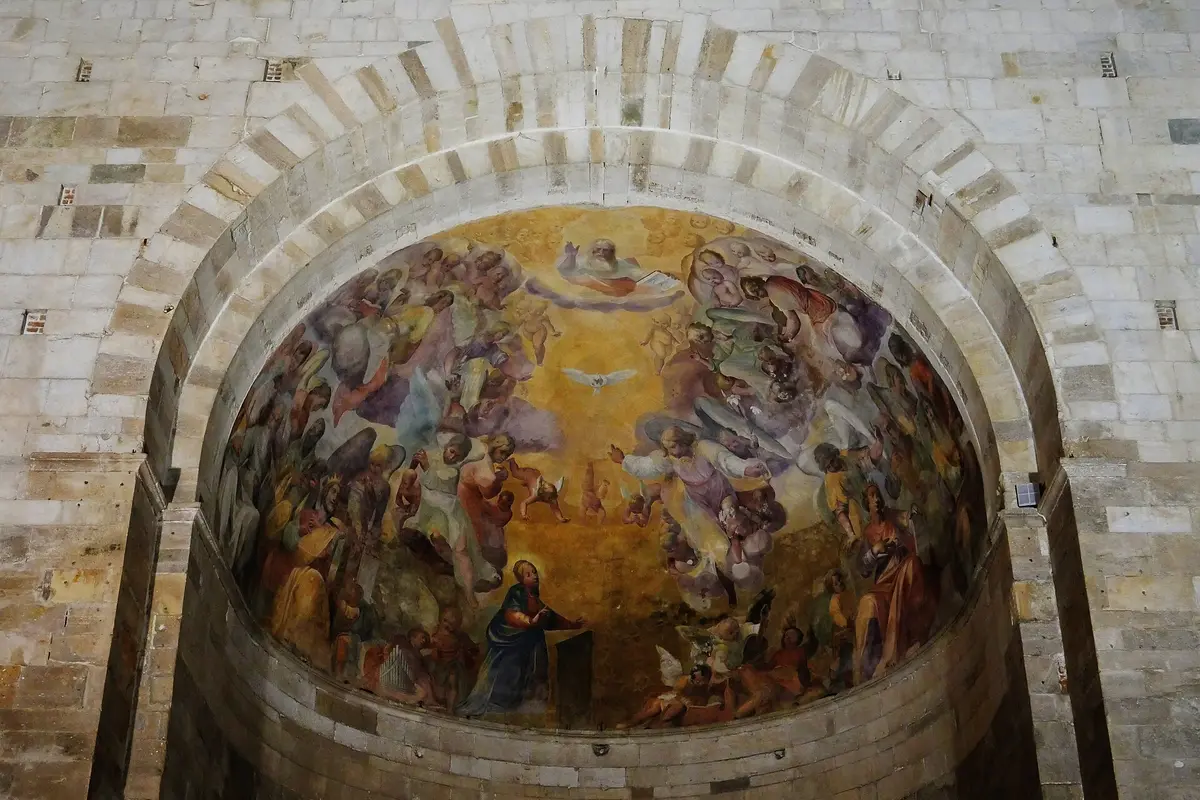
The church of Saints John and Reparata, usually called San Giovanni, is the room where the Puccini recital is held in the warmer months. It is a Romanesque church of the second half of the 12th century, standing more than two metres above an older basilica. That height difference is the clue to what lies below: one building was raised over another, and the earlier layers survive beneath the church.
The Roman layer
According to the Lucca Terre heritage guide, the colony of Lucca was founded in 180 B.C. The earliest preserved structures on this site date from the late Republican to the early Augustan period and are the remains of room pavements of a domus, a rich private house. In the imperial age, from the late 1st to the early 2nd century A.D., the area was radically transformed, and the new building was probably not residential. It may have been a public thermal complex, a Roman bath.
The early cathedral
In late antiquity a paleochristian basilica was built here, with a baptistery that had four apses, on top of the Roman structures. This was the earlier cathedral of Lucca. The Lucca tourist office says the Cathedral of San Martino became the cathedral in the 8th century in place of the ancient church of Saints John and Reparata. Substantial changes followed in the 8th to 10th centuries, before the Romanesque church was built over the whole sequence.
How the layers were found
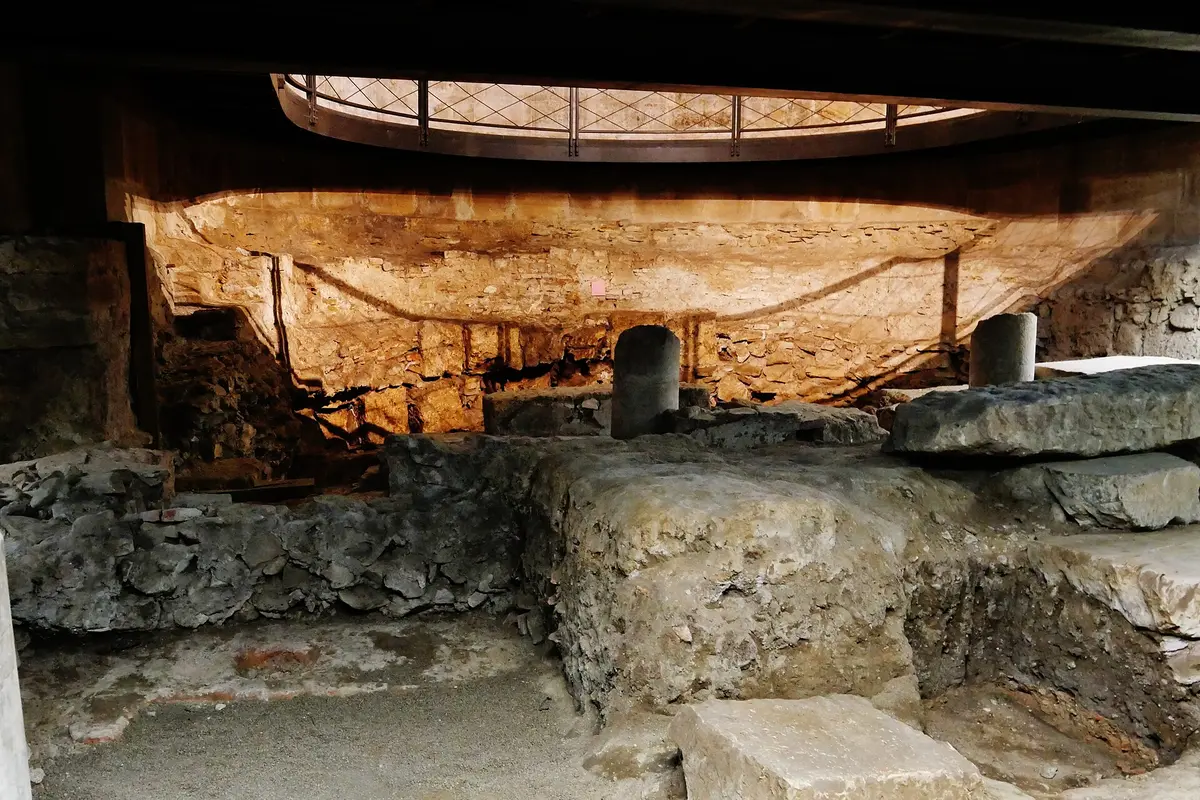
The Lucca Terre guide says the first deliberate excavation was carried out by Ridolfi in 1885. The baptistery was excavated in 1976 and 1977, which it describes as the first proper stratigraphic archaeological investigation in the city centre, and a probe under the apse and the north transept followed in 1990. Stratigraphic means that each layer is dug and recorded in order, so the sequence of Roman, late antique and medieval building can be read like pages in a book.
Walking the archaeological area
The cathedral museum complex describes visitors walking on metal walkways over the site, which traces the city's history from its Roman foundation to the Middle Ages. The remains include a Roman house, a domus Romana, with a mosaic floor, late antique structures of the first cathedral and baptistery, burials from the Lombard period of the 6th century and a 9th-century crypt. The archaeological area belongs to the complex, which sets its own opening hours and entry rules, so check its site before you plan a visit.
The ancient baptistery
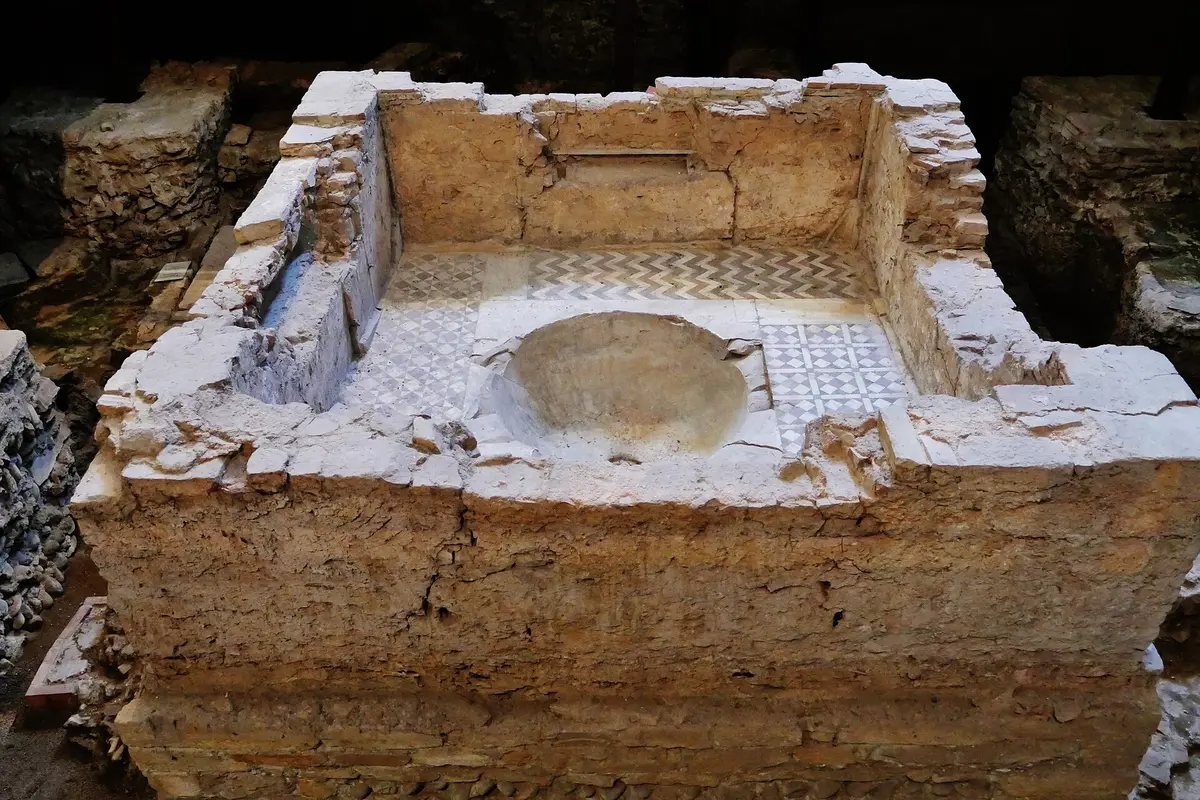
In the ancient baptistery, the Lucca Terre guide lists a fragment of cocciopesto pavement with a black-and-white cross pattern. Cocciopesto is a Roman flooring made with crushed terracotta. The original of that pavement was removed and is now in the National Museum of Villa Guinigi. The guide adds that a Roman quadrangular room may have been adapted as the first baptistery by adding four apses, and it presents that only as a conjecture. It is a different structure from the large later Baptistery beside the church.
The church as a concert room
In the warmer months the nave is set with rows of chairs for the Puccini recital, beneath the arches of the nave. The festival that organises it says the church is large enough that seats are always available. In the cooler months the concert moves to the Oratorio di San Giuseppe, which belongs to the same museum complex. Your confirmation names the venue for your date, so look it up before you leave, and read the venue guide for the way from the station.
Planning a visit around the concert
The complex's address is Piazza San Giovanni and Piazza San Martino, in the same cathedral quarter as the concert. The Puccini ticket covers the recital only, so treat the archaeological area as a separate visit and leave enough margin between it and the start time. The simplest plan is to visit by day, using the museum complex's own information, and to come back in the evening for the music.
Read next: Where the Puccini concert is held in Lucca
Sources